Newsletter Subscribe
Enter your email address below and subscribe to our newsletter

 Bysonu
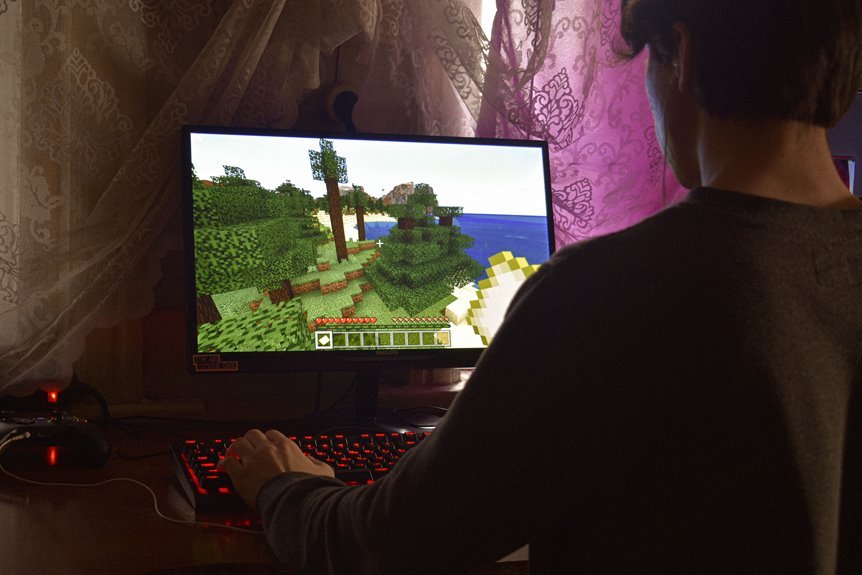
Minecraft Playbattlesquare presents a structured lens on open-ended play, where mechanics, boundaries, and practices are codified for reproducible outcomes. The framework emphasizes loadouts, timing, and resource flows as artifacts of a shared experiment. Archives preserve decisions, while debates test assumptions and refine tactics. The result is a slowly evolving map of what players can claim and defend. The question remains: what practical gains follow from such formalization, and who benefits most?
Minecraft PlaybattleSquare is a fictional or hypothetical Minecraft variation whose defining mechanics, community practices, and historical development are examined to understand its role within sandbox gaming culture.
The analysis presents what is being defined, what is at stake, and why it matters for players seeking creative sovereignty.
It clarifies boundaries, emphasizes cultural context, and sustains archival precision about participatory experimentation and interpretation.
To begin, newcomers should establish a minimal, well-documented loadout that foregrounds stability and reproducibility within PlaybattleSquare’s sandbox ruleset; this approach reduces setup friction and ensures that early experiments yield comparable results across sessions. The analysis notes jump timing as a measurable input and emphasizes loadout versatility, promoting consistent experimentation while preserving freedom to adjust tools within defined constraints.
The analysis moves from establishing a stable loadout to identifying the levers that decisively tilt PlaybattleSquare matches. Core strategies focus on timing, map awareness, and resource economy, while power ups that tilt alter momentum and control. Detachment preserves objectivity, documenting patterns without bias. Players optimize risk-reward, balancing aggression with retreat, and exploiting enemy misreads through disciplined, reversible tactics.
Practice, balance, and community constitute a triad for learning in PlaybattleSquare, where evaluative clips and ongoing debates map the discipline’s evolving standards. The analysis traces how practice debates crystallize practical skill without stifling creativity, while balance considerations guide fair judgment across varied playstyles. Archives capture iterative refinements, inviting readers to assess evidence critically and pursue informed, autonomous improvement within a collaborative culture.
Version compatibility remains unclear; official sources do not specify concrete cross play limits for Playbattlesquare. Analysts note ambiguous guidance, implying limited cross-platform access. This archival assessment emphasizes precise constraints and the need for authoritative clarification on cross play limits.
Solo queueing is possible, but team coordination generally yields higher success, depending on matchmaking balance and regional latency. The system supports both modes, though strategic flexibility favors occasional duo or small squad play for optimized outcomes.
There are no legitimate hidden mechanics or bugs to exploit; disclosure notes emphasize fair play. While explorations pursue freedom, archival analysis records no sanctioned methods, and exploits are discouraged, as they compromise integrity and balance within the system.
The audio cues are moderately loud, measured and controllable; they register clearly without overwhelming. In this archival assessment, silent footsteps and echoing chests serve as calibrated signals, aiding navigation while preserving player autonomy and a sense of space.
A hypothetical tournament demonstrates a spectator mode and replay feature exist in this context; they enable viewing from multiple angles and revisiting pivotal moments. Spectator mode and replay feature facilitate analytical review, archival documentation, and freedom in analysis.
In closing, Minecraft Playbattlesquare stands as a curated experiment in sovereignty within open-ended play, where reproducible loadouts, timing, and resource regimes anchor strategic legitimacy. Its archival ethos invites continual validation through clips, debates, and reversible tactics, preserving a traceable evolution of practice. Example: a hypothetical case study tracks a four-week cycle of loadout refinements, balancing power-ups with countermeasures, then codifies outcomes into a living appendix that informs future participants and preserves institutional memory of tactical innovations.